Noise at night in UAE homes: the WHO limits and Dubai's construction rules
Filed in Sleep
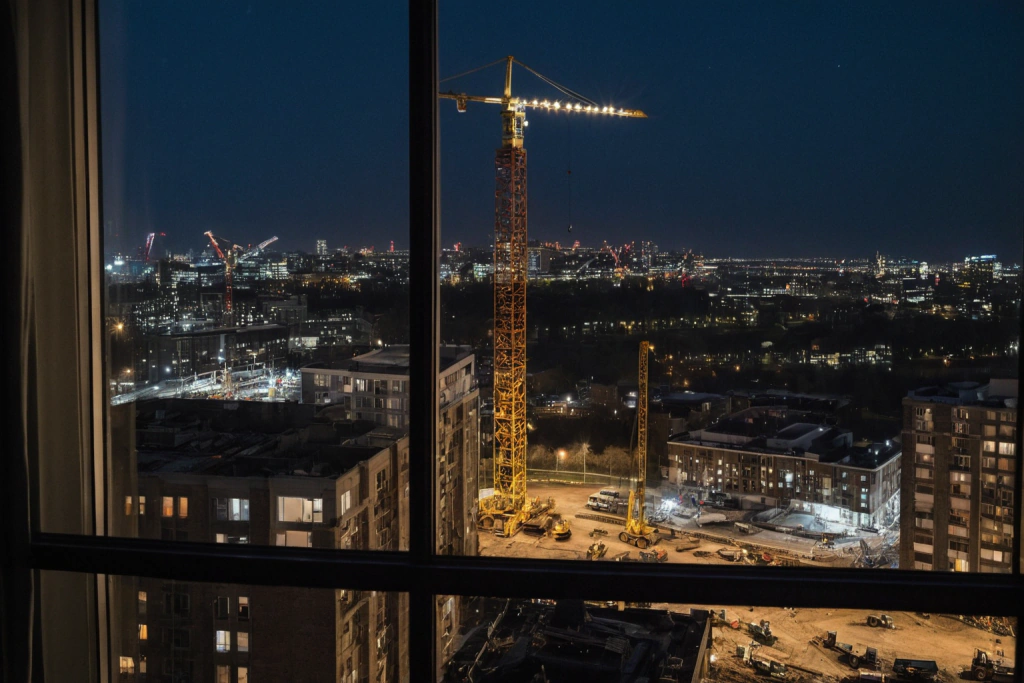
Night-time noise starts to harm sleep at levels that are quieter than most people expect. The World Health Organization's 2018 Environmental noise guidelines strongly recommend keeping road traffic noise at night below 45 decibels (dB) Lnight, measured outdoors at the most exposed facade of a home, because night-time road noise above that level is associated with adverse effects on sleep. The earlier WHO night noise guidelines of 2009 found adverse health effects starting from 40 dB at night.
What the WHO figures mean
The WHO numbers are long-term averages measured outside, not peaks measured at the pillow. Lnight is the equivalent continuous sound level over the night period, and the guidelines give it for the most exposed facade of a home, outdoors, reflecting long-term average exposure. The guidelines give separate night limits for each main source:
| Source of night noise | WHO recommended maximum (Lnight, outdoors at the facade) |
|---|---|
| Road traffic | 45 dB |
| Railways | 44 dB |
| Aircraft | 40 dB |
The 2018 guidelines rest on eight systematic reviews of the research, and in setting the night levels the guideline group aimed to keep the share of people who are highly sleep-disturbed low, at about 3%. The figures were written for the WHO European Region, but the evidence on sleep is not specific to Europe.
Indoors, a closed window removes part of the outdoor sound, so the level at the pillow is lower than the facade figure. The WHO measures at the facade because the facade is where noise can be compared between homes and controlled by planning, while what reaches the bedroom depends on each building's windows and walls.
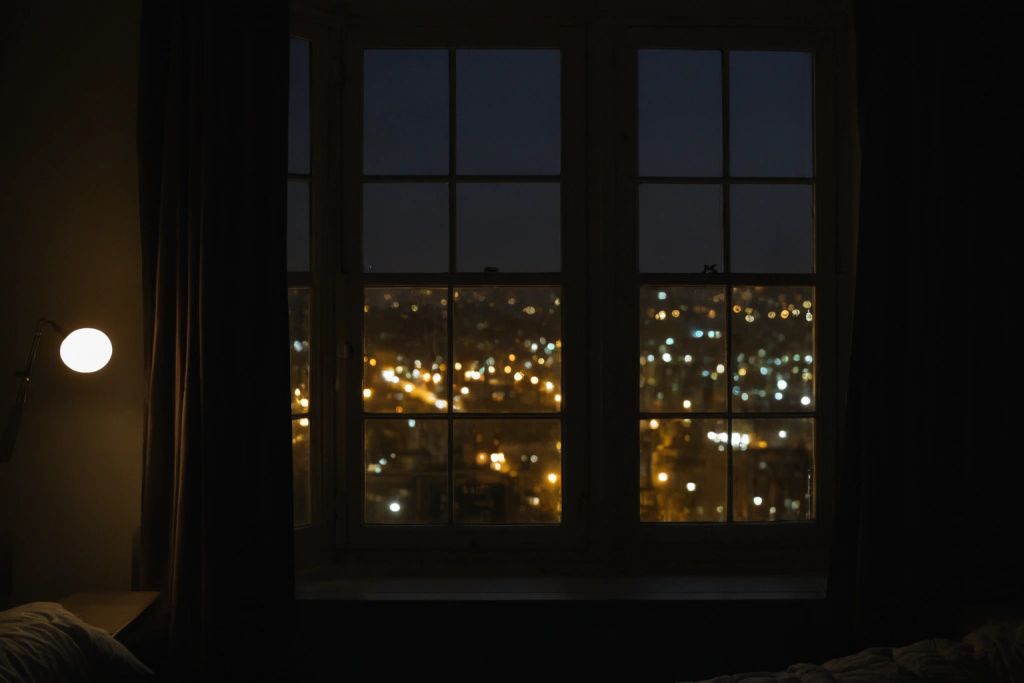
Construction at night in Dubai
Building work at night is a recurring complaint in UAE news. In April 2026 Khaleej Times reported residents of Jumeirah Lakes Towers describing pile driving and hammering at night, sometimes from 2 or 3 am, with children waking up and some residents running air conditioning and fans to mask the sound.
The same report sets out the rules. According to circular 613 of the Dubai Development Authority, issued on 27 February 2025, construction may make noise during daytime hours between 7 am and 8 pm. Work outside those hours needs a special permit from Dubai Municipality, and even with a permit the noise must stay within the decibel limits for nearby homes, which Khaleej Times put at approximately 45 to 60 dBA for residential areas. For the exact limit that applies to a particular street, Dubai Municipality is the authority to ask.
Air conditioners as a source and as a mask
Air conditioning is both a noise source and, for some people, a cover for other noise. A split unit's indoor fan, the outdoor units on neighbouring balconies and a building's rooftop plant all run through the night in summer. The JLT residents quoted by Khaleej Times described leaving air conditioning and fans running to drown out construction noise, while a unit that rattles becomes a noise problem of its own and is worth a service visit; the note on air conditioner maintenance covers what a service should include.
What helps inside a flat or villa
A household cannot change the traffic or the building site next door, but it can change what reaches the bed. Because the WHO measures exposure at the facade, the useful levers sit between the facade and the pillow.
- Sleep on the quiet side. A bedroom facing a courtyard or the back of the building gets a lower facade level than one facing a main road or a site.
- Close and seal windows. Gaps that let in dust and hot air also let in sound; the sealing advice in the note on villa insulation helps both.
- Report night work. In Dubai, night construction needs a permit and must meet residential limits, so out-of-hours work can be reported to Dubai Municipality.
A quiet bedroom still needs fresh air, and closing everything can trade noise for stale air. The note on carbon dioxide in closed bedrooms explains how to get some ventilation without opening the window to the street, and the note on bedroom temperature covers the heat side of the same night.
Sources
- World Health Organization Regional Office for Europe (2018). Environmental noise guidelines for the European Region
- World Health Organization Regional Office for Europe (2009). Night noise guidelines for Europe
- Khaleej Times (2026). Dubai's JLT residents ask authorities to act against nighttime construction noise