Cooking fumes and the kitchen hood: what Berkeley Lab measured
Filed in Indoor air
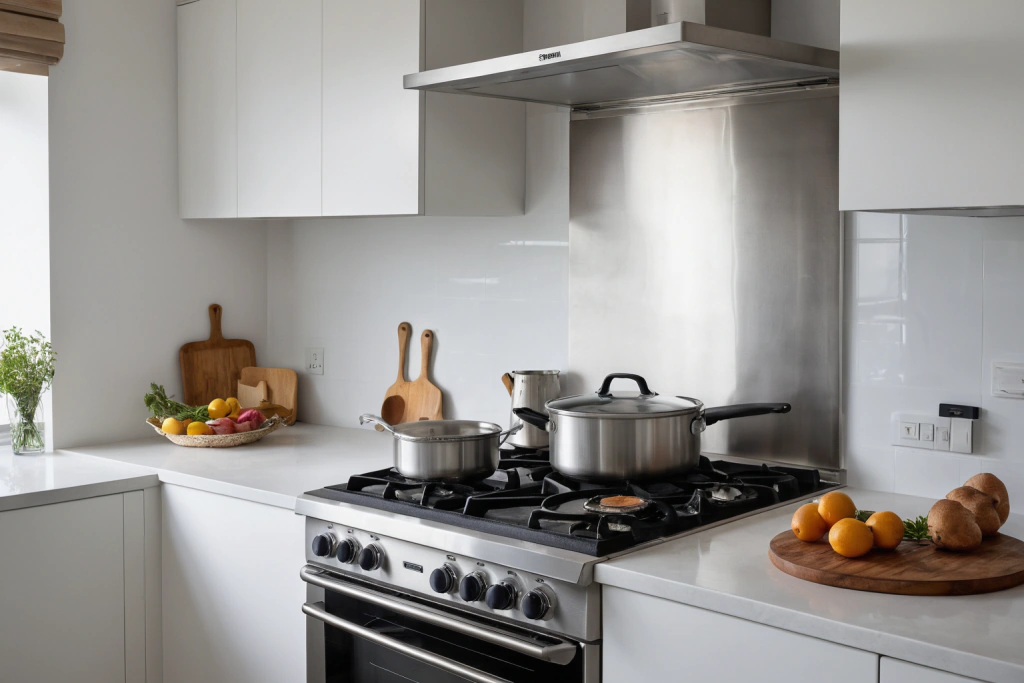
A kitchen hood removes much less of the smoke and gas from cooking than most people assume. Researchers at Lawrence Berkeley National Laboratory measured 15 hoods installed in real homes and found that 10 of them moved 70% or less of the airflow claimed in their product literature, and that under many normal conditions the hoods removed less than half of the pollutants emitted by gas burners.
Why cooking is the biggest indoor air event of the day
Cooking releases fine particles from hot oil and food, water vapour and, on a gas hob, combustion gases such as nitrogen dioxide (NO₂) and carbon dioxide. The Berkeley Lab team notes that gas burners and many cooking activities emit pollutants that can reach hazardous levels in homes. In a UAE flat with the windows shut for the summer, cooking happens in air that is not being replaced, so whatever the pan and the hob release stays indoors until a hood or an open window removes it.
Gas adds its own share. A 2024 study from Stanford University in Science Advances combined measurements from more than 100 homes with a room-by-room air model and estimated that gas and propane stoves raise long-term NO₂ exposure by 4.0 parts per billion on average across the United States, which is 75% of the World Health Organization's exposure guideline. The same study found that short-term exposure during typical gas stove use frequently exceeds WHO and US EPA benchmarks, and that people in homes smaller than 800 square feet, about 74 m², carry four times the long-term NO₂ exposure of people in homes larger than 3,000 square feet. Small flats concentrate whatever the hob releases.
What the Berkeley Lab measurements showed
The 2012 Berkeley Lab study in Indoor Air measured airflow, noise and capture efficiency, which is the share of the pollutant plume that the hood carries away before it spreads into the room. Several findings matter for anyone choosing or using a hood.
- Labels overstate airflow. Ten of the 15 installed devices delivered 70% or less of the maximum airflow stated in their literature, because ducts, bends and grilles add resistance.
- Shape matters. Units with a flat underside and no capture canopy, including microwave and extractor combinations mounted over the hob, captured much less than hoods with a real canopy at similar airflow.
- Back burners win. For almost every device, capture was substantially higher when the back burners were in use than when the front burners were.
- Enough flow is needed but not sufficient. An airflow of 95 litres per second, or 200 cubic feet per minute, was necessary to capture more than 75% of the emissions from front burners, and even that flow did not guarantee it.
Noise is the catch. At the highest fan setting, all 14 hoods tested for sound exceeded 56 decibels (A-weighted) in the kitchen, which is the main reason people run hoods on low.
Particles from frying: the hardest case
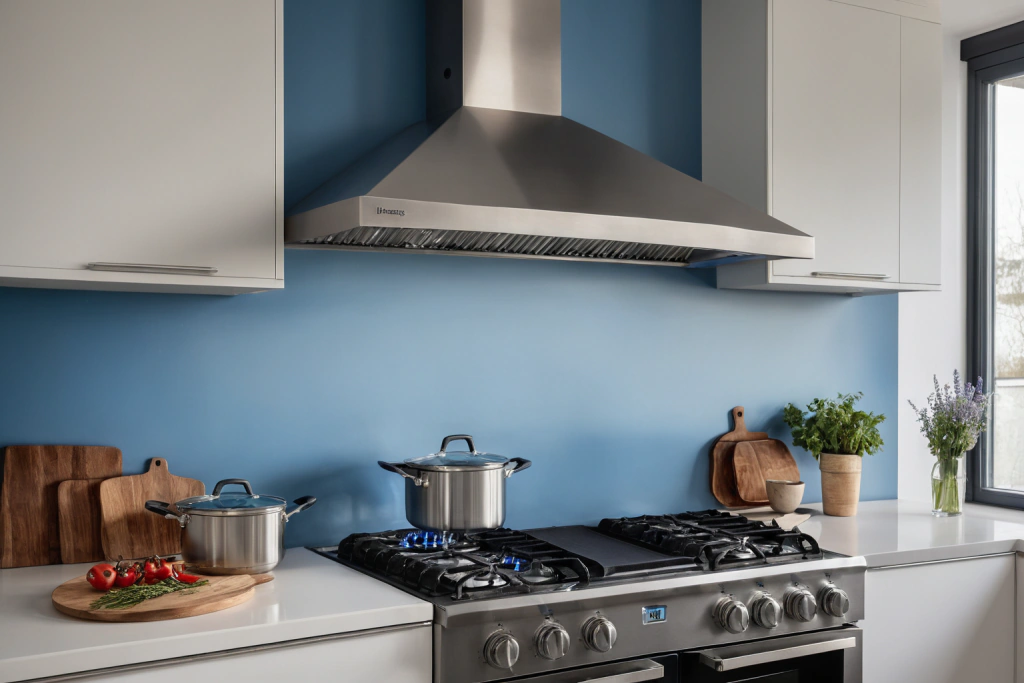
Frying at high heat on a front burner is the situation in which hoods do worst. In a follow-up study published in 2015, Berkeley Lab cooked scripted meals in a 121 m³ test chamber fitted with a kitchenette and four hoods. Pan-frying a burger over medium heat on the back burner, the hoods captured mostly above 80% of the particles. Stir-frying green beans in a wok over high heat on the front burner was another matter:
| Stir-fry on the front burner, high heat | Hood on low (51 to 68 L/s) | Hood on high (109 to 138 L/s) |
|---|---|---|
| Capture of burner CO₂ | 34% to 38% | 54% to 72% |
| Capture of fine particles (0.3 to 2.0 µm) | 3% to 11% | 16% to 70% |
On the low setting, at best about one fine particle in ten from the wok went into the hood; the rest stayed in the kitchen air. The study also found that a hood's capture of burner CO₂ does not always predict its capture of cooking particles, so a hood that handles gas fumes well can still miss smoke from frying.
Recirculating hoods are a different device
Some apartment kitchens have a hood that returns air to the kitchen through grease and charcoal filters instead of venting it outdoors. The Berkeley Lab capture figures describe hoods that exhaust to the outside, and they do not apply to recirculating models. A recirculating hood can trap grease and some odour, but water vapour and combustion gases come straight back into the room, so ventilation has to come from somewhere else: an open window, a bathroom or kitchen extract fan, or a building's fresh air supply.
Getting more out of the hood already installed
The measurements point to changes that cost nothing or very little.
- Cook on the back burners whenever the pan fits, especially for frying.
- Switch the hood on before cooking starts and use the higher settings for frying and stir-frying, accepting the noise for the minutes it takes.
- Leave the hood running for several minutes after cooking, while the air still holds smoke and steam.
- Clean or replace grease filters, which add resistance as they clog, in the same way that dirty air conditioner filters cut airflow.
- When choosing a new hood, prefer a canopy that covers the front burners and a duct to the outdoors over a flat-bottomed unit, and treat the airflow on the box as a ceiling rather than an expectation.
A portable air cleaner with a HEPA filter, sized by its clean air delivery rate as the EPA guide describes, can lower the particles that escape the hood, and it does far more than houseplants or ozone-producing gadgets. Steam from cooking also raises indoor humidity, a point covered in the note on humidity levels worth aiming for.

Sources
- Singer, Delp, Price and Apte, Lawrence Berkeley National Laboratory, Indoor Air (2012). Performance of installed cooking exhaust devices
- Lunden, Delp and Singer, Lawrence Berkeley National Laboratory, Indoor Air (2015). Capture efficiency of cooking-related fine and ultrafine particles by residential exhaust hoods
- Kashtan and others, Stanford University, Science Advances (2024). Nitrogen dioxide exposure, health outcomes, and associated demographic disparities due to gas and propane combustion by U.S. stoves
- US Environmental Protection Agency (2026). Guide to air cleaners in the home