Ionisers and ozone air purifiers: what they add to a sealed room
Filed in Indoor air
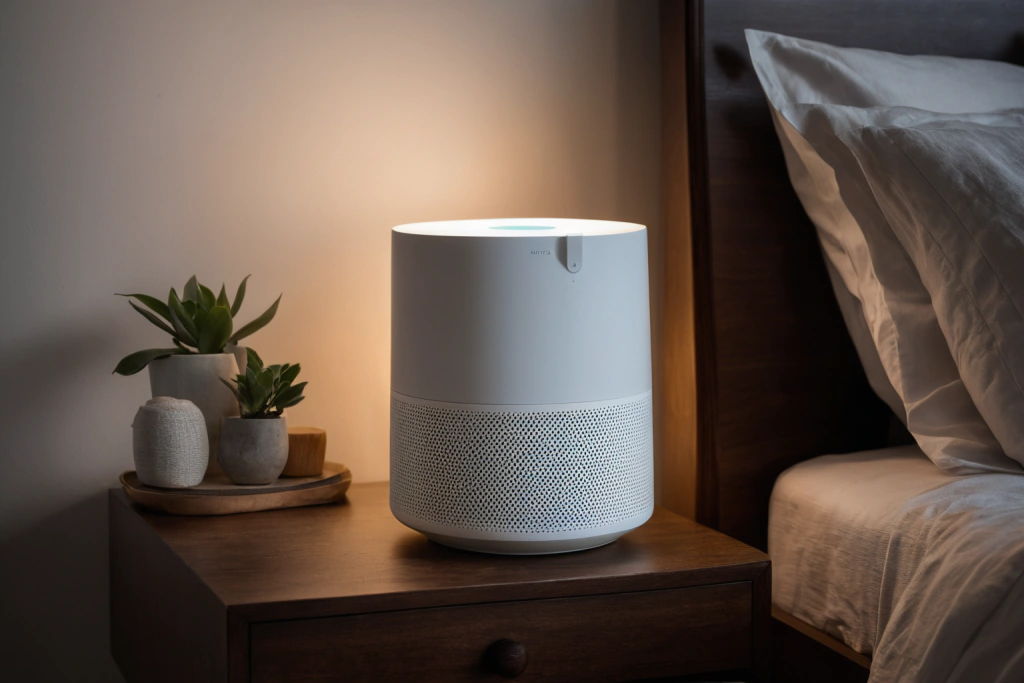
An air cleaner that produces ozone on purpose does not clean the air of a room at any concentration that is safe to breathe. The US Environmental Protection Agency states the finding directly: at concentrations that do not exceed public health standards, ozone is generally ineffective in controlling indoor air pollution. The California Air Resources Board goes further and requires every portable indoor air cleaner sold in California to be certified against an ozone emission standard.
What an ozone generator claims to do
Ozone generators are marketed with phrases such as "energised oxygen" or "pure air", and the EPA calls those terms misleading. Ozone is a molecule of three oxygen atoms. The third atom detaches easily and bonds to other substances, and that reactivity is the basis of the cleaning claim: ozone is supposed to break odours, chemicals and germs down into harmless carbon dioxide, oxygen and water.
The EPA's review of the research describes three problems with the claim:
- Many chemicals found indoors react with ozone so slowly, over months or years, that for practical purposes ozone does not react with them at all.
- Chemicals that do react with ozone often form by-products that are themselves harmful or irritating.
- To kill viruses, bacteria or mould in air, ozone would have to reach 5 to 10 times the concentration that public health standards allow.
The EPA also reports a laboratory test in which an ozone-generating device produced no measurable fall in formaldehyde, and older experiments in which ozone masked body odour without removing it.
How high indoor ozone gets
A closed room fills with ozone quickly, because ozone has nowhere to go. In a study the EPA cites, a large ozone generator rated by its maker for spaces up to 3,000 square feet was run on a high setting in a room of 350 square feet. Ozone in the room reached 0.50 to 0.80 parts per million, which the EPA describes as 5 to 10 times higher than public health limits. In another EPA test inside a house, several devices run on high with interior doors closed often produced 0.20 to 0.30 parts per million.
| Exposure limit quoted by the EPA | Ozone level |
|---|---|
| US Food and Drug Administration, ozone output of indoor medical devices | 0.05 ppm |
| US Occupational Safety and Health Administration, average over an 8-hour workday | 0.10 ppm |
| Room of 350 sq ft with an oversized generator on high (study cited by the EPA) | 0.50 to 0.80 ppm |
The setting on the dial is a poor guide. The EPA notes that ozone output is usually not proportional to the control setting, so "medium" does not mean half of "high", and the ability to smell ozone fades quickly once a person has been breathing it. A sealed, air-conditioned bedroom in a UAE summer, with the door shut and the split unit recirculating room air, is close to the worst case the EPA describes: a small space, closed doors and little outdoor air.
What ozone does to the lungs
Ozone damages lung tissue at fairly low amounts. The EPA lists chest pain, coughing, shortness of breath and throat irritation among the effects, along with worse asthma and a reduced ability to fight respiratory infections. Exercise, longer exposure and existing lung disease raise the risk. A device sold to people with allergies or asthma, who are the most likely buyers, can therefore harm the people it is marketed to help.
Ionisers, plasma units and UV lamps
Not every device that emits ozone is sold as an ozone generator. The EPA's guide to air cleaners warns that air cleaners containing electrostatic precipitators, ionisers, UV lights without adequate lamp coatings and plasma technology may have the potential to emit ozone as a by-product. The packaging of a tabletop "ioniser" or "plasma purifier" sold online often says nothing about ozone either way.
California is the clearest reference point because it regulates the question. The California Air Resources Board requires all portable indoor air cleaning devices sold in the state to be certified to meet ozone and electrical safety standards, publishes a list of certified air cleaners, and keeps a separate list of potentially hazardous ozone generators. A model on the certified list has been tested for ozone output; a model that appears on neither list has simply not been checked.
What to buy instead
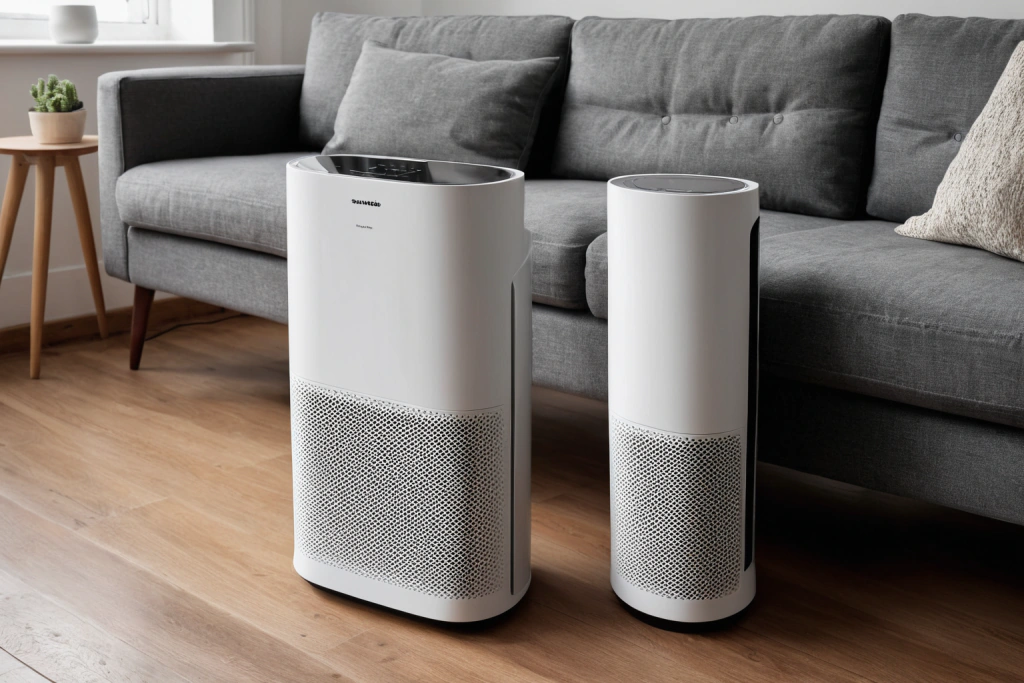
A filter that traps particles, and a carbon bed for gases, removes pollutants without adding a new one. The EPA guide recommends choosing a portable air cleaner by its clean air delivery rate (CADR) for the size of the room, and avoiding devices that intentionally produce ozone.
- Read the technical sheet and look for a HEPA filter and a CADR figure. A CADR is measured for particles, so it says nothing about gases.
- For odours and chemicals, look for a substantial activated carbon filter. The EPA notes that there is no widely used rating system for gas removal, and that carbon works when there is a large amount of it.
- Check whether the model appears on the CARB list of certified air cleaners, even when buying outside California.
- Switch off or avoid any "ioniser", "plasma" or "activated oxygen" function that cannot be confirmed as ozone-free.
Gadgets are the last step rather than the first. The EPA ranks source control and ventilation ahead of filtration, which in a UAE flat means capturing cooking fumes at the hob, choosing filters that stop fine dust and making sure a closed bedroom gets some outdoor air overnight. The note on houseplants and indoor air covers the other popular shortcut.
Sources
- US Environmental Protection Agency (2026). Ozone generators that are sold as air cleaners
- US Environmental Protection Agency (2026). Guide to air cleaners in the home
- California Air Resources Board (2026). Air cleaners and ozone generating products