Curtains, blinds and shades: how much summer heat they keep out
Filed in Heat and cooling
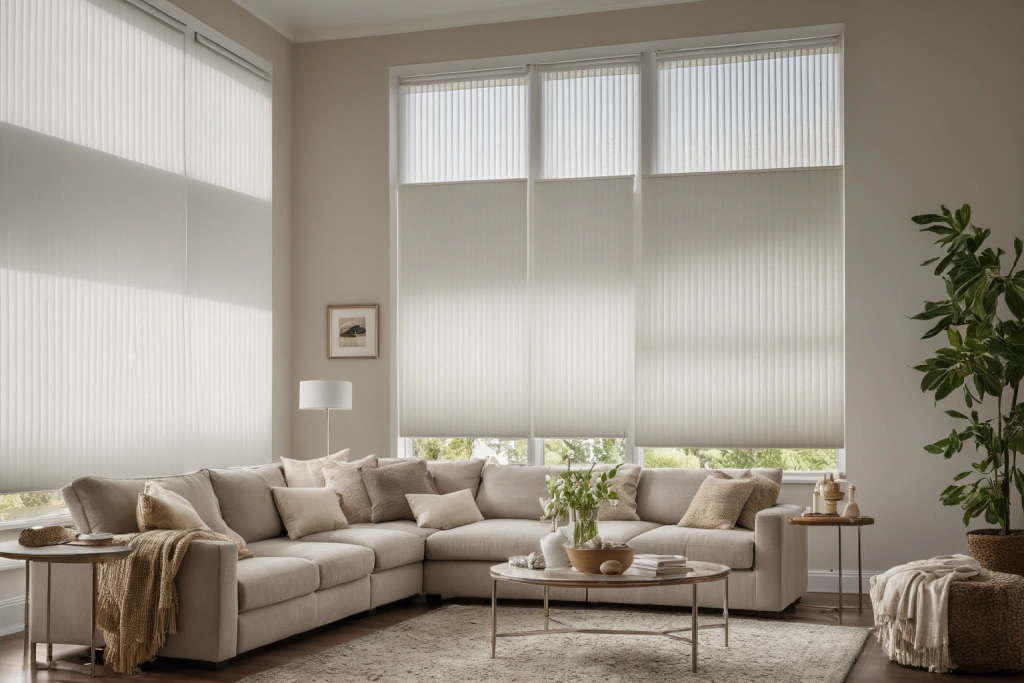
What hangs inside a window changes how hard the air conditioning has to work. In a pair of identical test homes run by the Pacific Northwest National Laboratory, insulating cellular shades kept closed through the summer cut heating, ventilation and air conditioning energy by 16.6% compared with ordinary white vinyl blinds. Lawrence Berkeley National Laboratory's simulations add a broader rule: in climates dominated by cooling, all the window attachments it studied save energy.
Why windows decide summer cooling loads
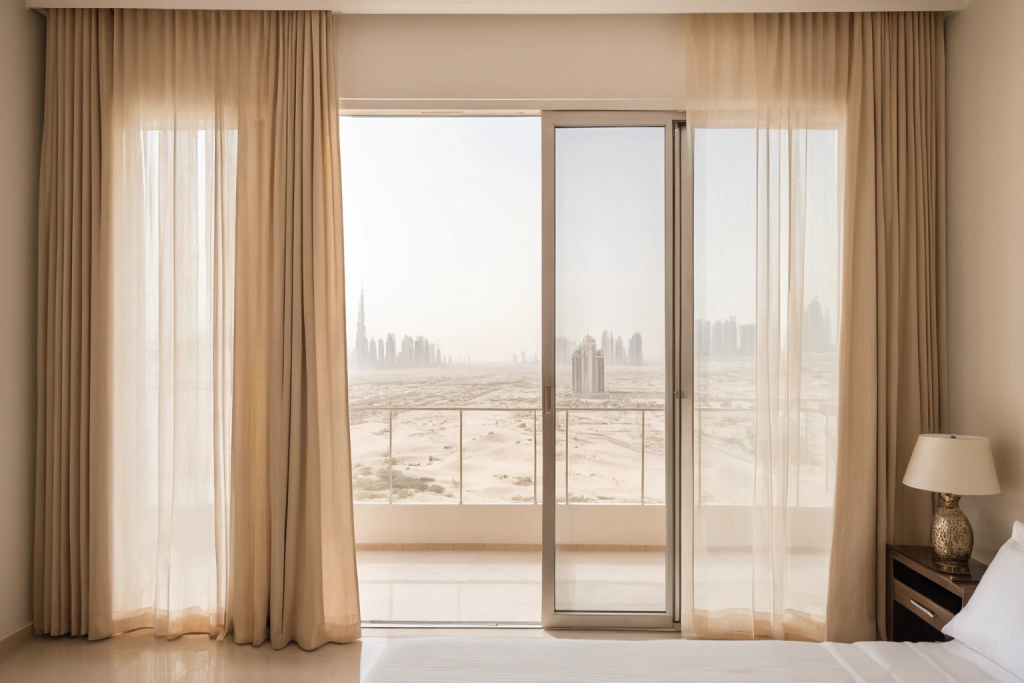
A window lets in sunlight, and sunlight that passes through glass becomes heat in the room. The Dubai Electricity and Water Authority (DEWA) includes this in its cooling advice: during summer, use curtains, drapes, shades, awnings and reflective materials to reduce the heat entering through glass and windows.
A covering works in two ways. A covering blocks or reflects part of the sunlight before the sunlight reaches the room, and it traps a layer of air that slows heat flow through the window. A thin blind does the first job partly and the second hardly at all, which is why the type of covering matters as much as whether it is closed.
What the test homes measured
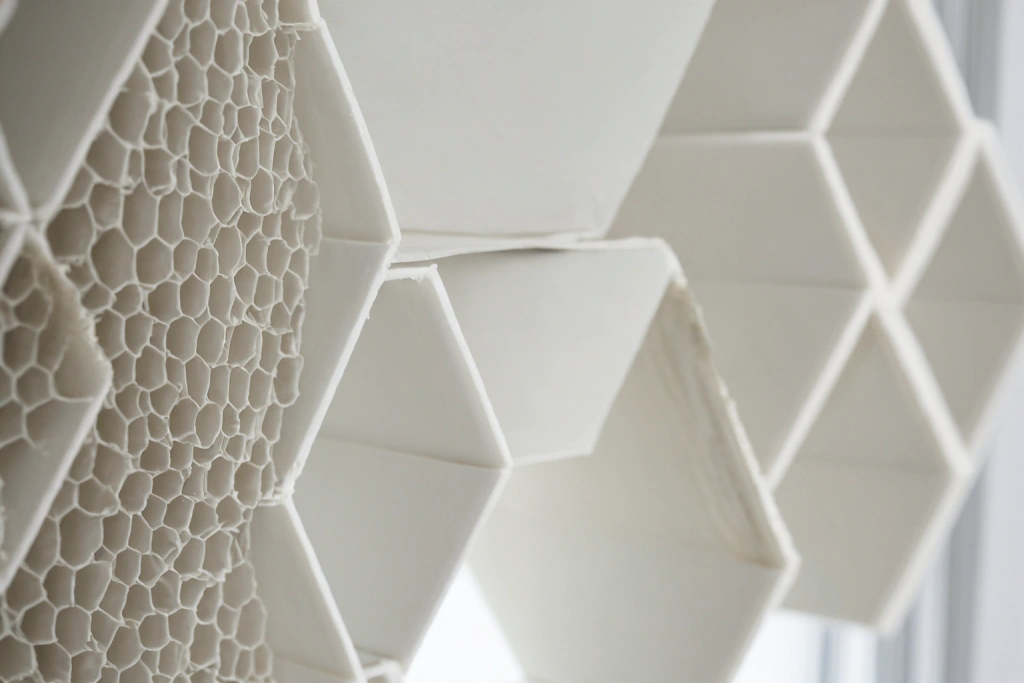
The Pacific Northwest National Laboratory (PNNL) ran the study in a matched pair of all-electric, factory-built homes of 1,500 square feet on its campus in Richland, Washington, a climate with cold winters and hot summers. One home received opaque honeycomb cellular shades on the inside of its windows; the other had either no coverings or standard white vinyl horizontal blinds. Because the homes are identical, the difference in energy use can be attributed to the shades. PNNL published the results in November 2016.
| Test (PNNL Lab Homes, 2015 and 2016 cooling seasons) | Reduction in HVAC energy with cellular shades |
|---|---|
| Shades on a daily schedule, against no coverings | 14.8% (±2.1) |
| Shades on a daily schedule, against white vinyl blinds | 15.3% (±2.9) |
| Shades and blinds both closed all the time | 16.6% (±2.9) |
The US Department of Energy's fact sheet on the work notes that blinds block some solar radiation but provide little insulation, and that Berkeley Lab simulations show cellular shades achieving higher energy savings than all other types of shading device. The same fact sheet reports that window attachments can save about 15% of a household's annual heating and cooling energy compared with vinyl blinds.
How far the results travel to the UAE
The test homes were in the US Pacific Northwest, not the Gulf, so the percentages should not be copied straight onto a Dubai bill. Two points do carry over. First, Berkeley Lab's modelling across 12 US climate zones found that in cooling-dominated climates every type of window attachment it studied saved energy, while in heating-dominated climates some saved little or even increased total energy use; the UAE is about as cooling-dominated as a climate gets. Second, use matters: Berkeley Lab notes that the way occupants deploy operable attachments can have a large effect on their energy performance, and the PNNL results differ with the schedule the shades followed.
In a UAE summer, using shades well mostly means keeping them closed on sunny facades during the hours the sun hits the glass. The PNNL test with both coverings closed all the time gave the largest saving of the three, 16.6%.
Choosing coverings for a UAE home
The right covering depends on the window and on what the building allows, and the test results narrow the choice quickly.
- Start with the sunniest glass. West-facing windows and large glazed doors take the most sun on a summer afternoon, so they repay a good covering first.
- Prefer coverings that trap air. Cellular shades trap air in their cells and between shade and glass, while the DOE fact sheet notes that blinds give little insulation.
- Close them during sun hours. A covering that stays open does nothing for cooling, and a covering that is closed when the sun is on the glass does the most.
- Use exterior shading where the building permits it. Awnings and solar screens are among the attachments Berkeley Lab modelled; in towers where residents cannot alter the facade, interior coverings and window film are the options left.
Coverings and the rest of the cooling plan
Window coverings sit alongside other measures that cut the same heat gain, and spacecraft rely on layered blankets for the same job of keeping unwanted heat out, as the note on how the Hope probe controls its heat explains. Window film works on the glass itself and keeps working when coverings are open, as the note on window film explains. A cooler room also lets the thermostat go higher without discomfort when air moves, covered in the note on ceiling fans. For villa owners, the roof and walls are the next step, described in the note on insulation under Al Sa'fat.
Coverings also matter at night for sleep, since blackout fabrics keep out street and building lights, a subject taken up in the note on evening light and sleep.
Sources
- Cort and others, Pacific Northwest National Laboratory, for the US Department of Energy (2016). Evaluation of cellular shades in the PNNL Lab Homes (PNNL-24857, Rev. 2)
- US Department of Energy, Building Technologies Office (2021). Interior cellular shades boost home energy performance (fact sheet)
- Lawrence Berkeley National Laboratory, Windows and Daylighting Group (2026). Residential windows and attachments
- Dubai Electricity and Water Authority (DEWA) (2026). Cooling: conservation tips