Mould in UAE homes: condensation, cold ducts and wet weather
Filed in Humidity and damp
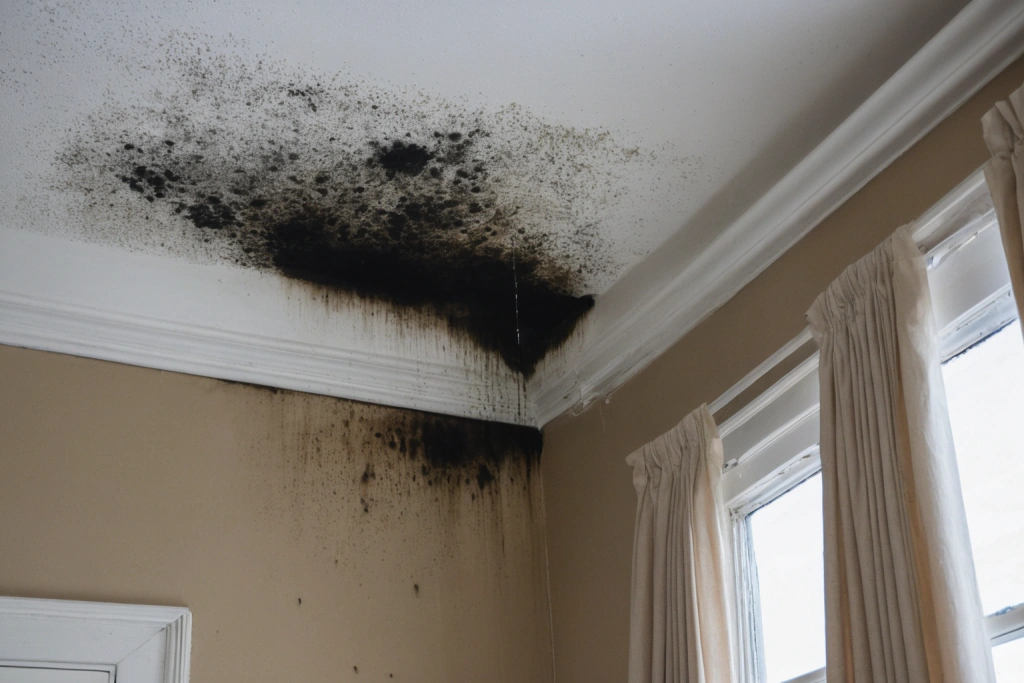
Mould in a UAE home is a moisture problem first and a cleaning problem second. Mould spores are everywhere, and the US Environmental Protection Agency explains that they only grow indoors when they land on a wet or damp spot. In a hot, humid summer the damp spot is usually a surface that the air conditioning has made colder than the dew point of the air touching it, so the fix starts with finding where water condenses.
Why the UAE summer turns cold surfaces wet
Condensation forms on any surface colder than the dew point of the surrounding air. The dew point is the temperature at which air can no longer hold its water vapour, and The National's explainer on UAE humidity describes it as the temperature at which dew begins to form. Coastal cities such as Dubai and Abu Dhabi get the worst of the humidity, and the National Centre of Meteorology puts the average maximum relative humidity in August at 72%.
Typical summer and indoor air has these dew points:
| Air | Relative humidity | Dew point |
|---|---|---|
| Outdoor summer air, 35 °C | 60% | about 26 °C |
| Outdoor summer air, 32 °C | 72% | about 26 °C |
| Outdoor humid night, 30 °C | 80% | about 26 °C |
| Cooled room, 24 °C | 50% | about 13 °C |
The numbers explain most summer mould in the region. Humid outdoor air carries a dew point in the mid-20s Celsius, so any surface that the air conditioning keeps at 24 °C or less will sweat if outdoor air reaches it. Typical places are the outside face of a cold balcony door or window, supply ducts and their grilles where they pass through a warm, unconditioned ceiling void, chilled-water pipes, and the back of a wall cupboard pressed against a cooled wall. Inside the cooled room the problem is the reverse one: room air at 24 °C and 50% has a dew point near 13 °C, so condensation forms only on surfaces colder than that, such as the supply grille of a unit set very cold.
Rain, leaks and the 24 to 48 hour rule
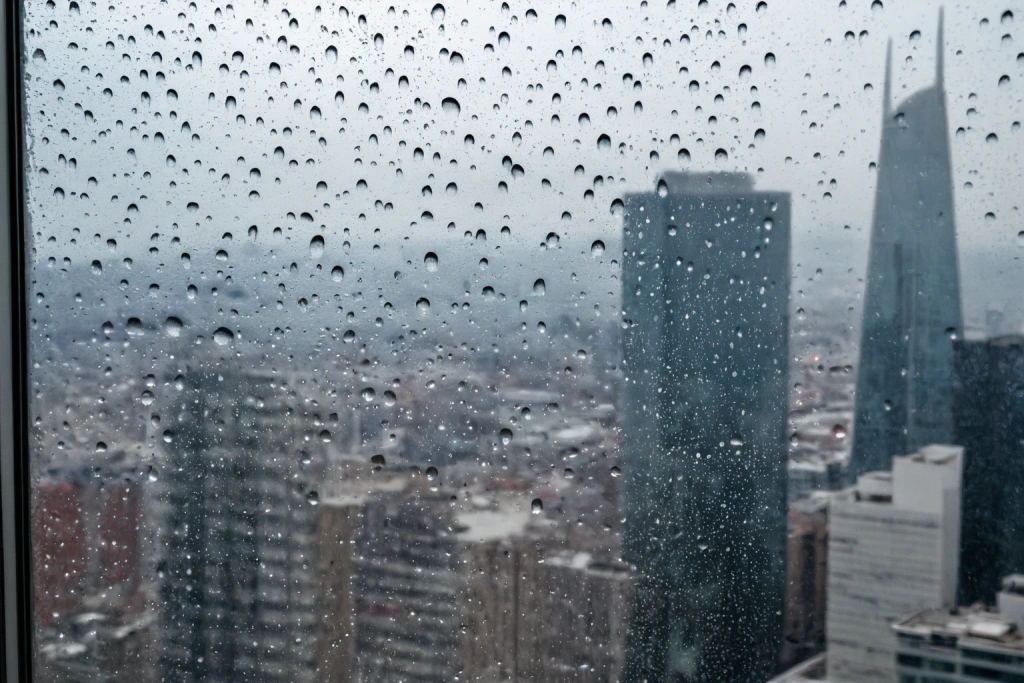
Rain adds the second route for water, and recent years have tested UAE buildings hard. On 16 April 2024 the National Centre of Meteorology called the rainfall of the previous 24 hours an exceptional event in the country's climate history since records began in 1949, with 254 mm in less than 24 hours at Khatm Al Shakla in Al Ain, according to the Emirates News Agency. In November 2026 the centre again forecast rain over northern, eastern and coastal areas from 18 to 20 November, and Khaleej Times reported wadis flowing in Fujairah.
The EPA's rule for water damage is short: dry water-damaged areas and items within 24 to 48 hours, and in most cases mould will not grow. After a roof leak, a blocked balcony drain or water under a door, the clock matters more than the cleaning product. Wet carpets, underlay, plasterboard and upholstered furniture that cannot be dried within that window are where mould takes hold.
Health effects the WHO links to damp
Damp buildings are a health issue, not only a cosmetic one. The World Health Organization's 2009 guidelines on dampness and mould, a review of the scientific evidence, concluded that the most important effects are increased prevalence of respiratory symptoms, allergies and asthma, and disturbance of the immune system. The EPA adds that mould can trigger asthma attacks in people with asthma who are allergic to it, and can irritate the eyes, skin, nose, throat and lungs of people who are not allergic.
Cleaning: when to do it yourself
The EPA draws the line at about 10 square feet, roughly a patch of 1 metre by 1 metre. Smaller areas can usually be cleaned by the occupants; larger growth, or growth after heavy water damage, calls for professional remediation. The EPA guide also makes three points that many households get wrong:
- Bleach and other biocides are not recommended as a routine part of mould cleanup, and bleach must never be mixed with ammonia or other cleaners.
- Dead mould can still cause allergic reactions, so killing it is not enough; it has to be removed.
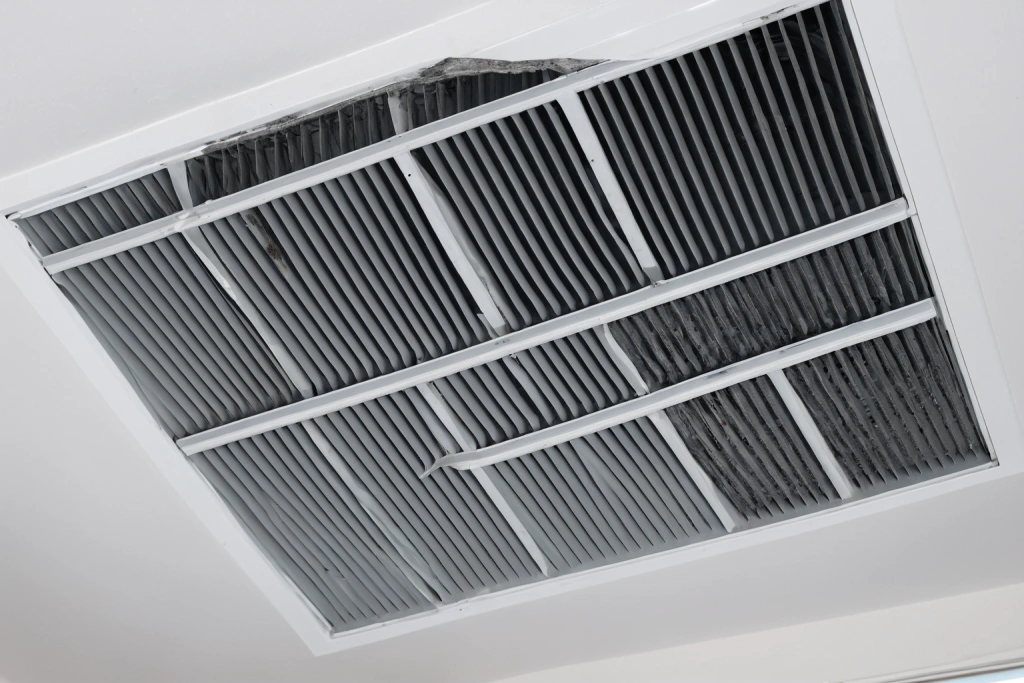
- If mould is suspected inside the air conditioning system, for example near its air intake, the system should not be run until the problem is assessed.
Preventing the next patch
The EPA recommends keeping indoor relative humidity below 60%, ideally between 30% and 50%, and acting quickly when condensation appears on windows, walls or pipes.
- Keep humid outdoor air away from cold surfaces: seal gaps around balcony doors and windows, and keep doors to the balcony shut while the air conditioning runs.
- Insulate cold pipes and ducts, as the EPA recommends for cold water pipes, especially where they pass through ceiling voids that are not cooled.
- Keep air conditioning drip pans clean and drain lines flowing, another point on the EPA's list. A blocked condensate line overflows into ceilings and walls.
- Run bathroom and kitchen extract fans while showering and cooking, and for a while afterwards.
- Measure humidity with a simple meter, which the EPA notes is small and inexpensive, rather than guessing.
The right target for a cooled home sits in a narrow band, because air that is too dry cracks wood and air that is too damp feeds mould and dust mites. The note on indoor humidity levels for UAE homes sets out that band, and the note on solid wood furniture shows what happens at the dry end. Clogged filters and coils, covered in the note on air conditioner maintenance, also make a unit worse at removing moisture. Bedrooms deserve particular attention, since closed doors at night trap both moisture and carbon dioxide. Leaks from pipes and tanks are the other common source of damp, and DEWA's list of warning signs is in the note on household water and leaks. Condensation can also be put to use: researchers at Khalifa University are designing surfaces that collect water from fog. Water tanks and heaters that sit warm and still raise a different risk, bacteria rather than mould, covered in the note on Legionella and the 60 °C rule.
Sources
- US Environmental Protection Agency (2026). A brief guide to mold, moisture and your home
- World Health Organization Regional Office for Europe (2009). WHO guidelines for indoor air quality: dampness and mould
- The National (2023). Why does it feel so much hotter? Humidity in the UAE explained
- Emirates News Agency (WAM) (2024). UAE witnesses largest rainfall in 75 years
- Khaleej Times (2026). Watch: Wadis flow as heavy rains sweep across parts of Ras Al Khaimah, Fujairah